
Why Amish don’t use cars: A Simple Choice That Speaks Volumes
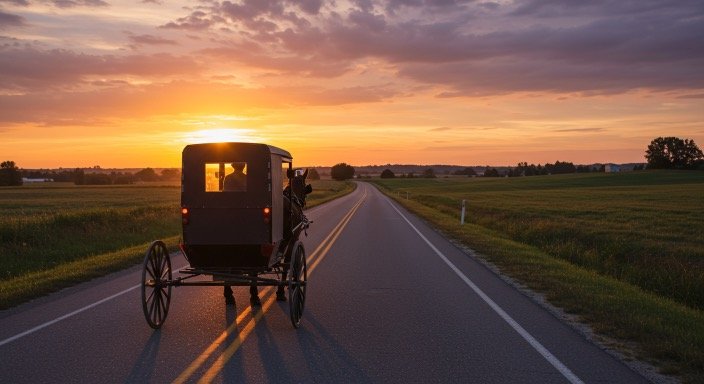
If you’ve ever driven through Amish country, you’ve probably seen a black horse-drawn buggy rolling slowly down the road beside a line of cars. It’s a peaceful image that sparks curiosity — in a world where cars are everywhere, why Amish don’t use cars seems like a mystery. But for the Amish, this isn’t about resisting progress or nostalgia. It’s about preserving faith, humility, and community.
The decision to avoid automobiles isn’t random — it’s a conscious spiritual boundary that defines how the Amish interact with the modern world. Once you understand the reasons behind it, you’ll realize that this simple choice represents the core of the Amish lifestyle: separation from worldly influences and dependence on one another rather than machines.
Why Amish Don’t Use Cars
Faith at the Wheel: The Spiritual Reason Behind It
The Amish way of life follows the Ordnung, an unwritten code that guides every aspect of daily living — from dress to technology. At its heart is the principle of humility (Gelassenheit), meaning “submission” or “letting go.”
Cars symbolize independence, status, and speed — values that clash with Amish teachings. By avoiding automobiles, the Amish intentionally limit mobility to strengthen their communities. The act of refusing a car isn’t just a rule; it’s a reflection of deep spiritual obedience.
Source: Amish America – Technology and the Amish
Read also: How Amish Build Houses Without Power Tools
Why Amish Don’t Use Cars
Community Over Convenience
A car gives freedom — to go wherever you want, whenever you want. But the Amish believe that too much freedom weakens community bonds. Owning cars would allow families to live farther apart, attend different churches, or seek entertainment outside their settlement.
Instead, Amish people rely on horse-drawn buggies and communal transport. This keeps families close and encourages daily interactions with neighbors. When an Amish family needs to travel long distances, they hire an “English” driver — often called an Amish taxi. It’s a practical way to get around while still respecting their beliefs.
Source: Lancaster Online – Amish Transportation
Why Amish Don’t Use Cars
Slowing Down: A Different Relationship with Time
Modern life is obsessed with speed — faster cars, faster internet, faster everything. The Amish see this rush as spiritually dangerous. Driving cars would make life feel rushed, detached, and less meaningful.
Horse-drawn buggies, on the other hand, encourage presence. Traveling 5 to 10 miles per hour allows time for reflection, prayer, or conversation. It’s a rhythm of life that values mindfulness over movement.
Source: History Collection – Amish Way of Life
Why Amish Don’t Use Cars
Maintaining Separation from the “English” World
One of the key goals of Amish culture is separation from the modern, non-Amish world — often referred to as the “English.” Cars are seen as a bridge to that outside culture. Owning one could make it easier to attend worldly events, explore cities, or form relationships that could weaken Amish values.
This separation isn’t meant to isolate; it’s designed to protect faith. Without cars, the Amish lifestyle remains centered around home, family, church, and farming. Their physical separation helps preserve moral separation too.
Why Amish Don’t Use Cars
The Power of Dependence
For most people, independence is a virtue. But the Amish view interdependence — relying on others — as a strength. By avoiding cars, they depend more on family and neighbors. Need to visit a relative? Someone with a buggy offers a ride. Need supplies from town? Several families may share one trip.
This dependence fosters unity and humility. The Amish believe that by working together, they strengthen their community bonds and faith. It’s a direct rejection of the self-sufficiency that cars often represent.
Modesty and Equality
Cars, in the eyes of the Amish, are not only machines — they are symbols of status. One person might drive a luxury car, while another drives an old one, creating visible inequality. In a community that values modesty and simplicity, this would create unnecessary competition.
By refusing cars, the Amish maintain a sense of equality. A buggy is a buggy; no one’s faster or flashier than anyone else. This equality reinforces harmony, humility, and unity.
Source: Amish Studies – The Amish and Technology
The Role of the Horse and Buggy
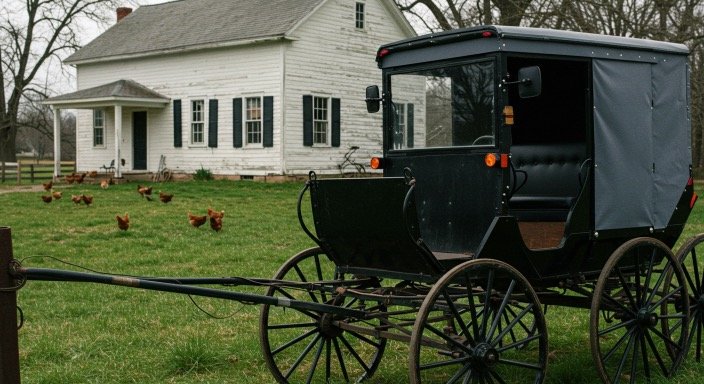
The horse and buggy are not just practical tools — they’re powerful cultural symbols. They represent discipline, patience, and restraint. Every aspect of buggy ownership reflects Amish principles:
- Color and style: Black or gray for simplicity.
- Design: Functional and modest, avoiding decoration.
- Speed: Controlled and respectful to surroundings.
Each buggy is often handmade by Amish craftsmen using traditional joinery — the same way they build furniture and houses. Even their transportation is an act of craftsmanship and faith.
Source: Amish Lifestylle
Why Amish Don’t Use Cars
Modern Exceptions: Taxis, Buses, and Work Vehicles
While Amish individuals don’t own cars, they do occasionally use modern transportation under specific conditions. For instance, they might hire a driver for medical appointments, business deliveries, or distant weddings.
Some Amish communities operate small businesses — carpentry shops, greenhouses, or markets — that require deliveries. To accommodate this, they might hire non-Amish workers who handle transportation. Still, ownership of cars remains strictly forbidden. The difference is clear: they may use technology when necessary, but never let it change their way of life.
Source: Dutch Crafters – Amish Business Practices
Economic Impact: Slower, but Stronger
Avoiding cars means the Amish operate largely within local economies. They buy and sell locally, rely on neighbors for trade, and avoid commuting to distant jobs. This limited range actually strengthens small-scale businesses — woodworking, farming, and handmade crafts thrive because they are community-driven.
Even their slow transport system contributes to a sustainable economy. Less fuel, less pollution, and fewer outside dependencies — it’s a lifestyle that quietly supports both the environment and local prosperity.
Read our article: How Amish build houses without power tools
The Psychological Calm of a Slower Life
The slower pace of Amish travel creates space for peace of mind. While many people experience anxiety from commutes and traffic, the Amish enjoy a calm, unhurried routine. Driving a buggy isn’t just a necessity; it’s a spiritual practice of patience and gratitude.
Without the distractions of phones, music, or traffic lights, an Amish journey becomes quiet reflection time. Every mile reinforces mindfulness, discipline, and appreciation for the natural world.
Source: Psychology Today – Slow Living Benefits
What Happens During Emergencies?
In emergencies, Amish families adapt. While they won’t personally drive, they won’t refuse help either. If someone is sick or injured, they’ll call upon a trusted non-Amish neighbor or local driver to transport them to a hospital.
This shows the balance within Amish belief — commitment to their principles, yet flexibility in compassion. Their faith never prohibits saving a life; it simply avoids unnecessary dependence on modern convenience.
Source: how do the amish approach healthcare
Lessons We Can Learn from the Amish
The Amish decision to avoid cars may seem extreme, but it carries timeless wisdom. Their lifestyle challenges modern society to ask: Do our machines control us more than we realize?
From the Amish, we can learn that:
- Connection beats convenience. Real relationships matter more than speed.
- Simplicity brings peace. The fewer distractions, the more meaningful life becomes.
- Faith in community creates resilience. Depending on others strengthens bonds.
Even if we can’t give up cars, we can embrace their spirit of simplicity and intentional living in our own way.
Bringing It All Together
To outsiders, the Amish refusal to drive may look like stubbornness. But when you look closer, it’s a profound expression of values — humility, discipline, and unity. The decision not to own cars isn’t about rejecting technology; it’s about protecting what truly matters.
Every time a buggy rolls down a country road, it carries a message: progress doesn’t always mean speed. Sometimes, the slower path is the one that keeps your soul — and your community — intact.
More information in this link: Amish Heritage – Amish Lifestyle Insights